


Atly – Know where to go
Steps Ltd.
When I want to find somewhere worth visiting, I usually do not need another giant directory packed with every possible business. I need a shorter, more useful path from “where should I go?” to an actual place I would enjoy. That is the main reason Atly – Know where to go caught my attention. It is a free travel and local app from Steps Ltd. that focuses on helping people discover places through smarter-looking results rather than making them dig through an endless list.
My experience with it is best described as a discovery-first approach. Instead of treating a destination as a collection of map pins, Atly is more useful when I already have a mood, preference, or loose idea in mind and want help turning that into a practical outing. It feels aimed at the moment when a normal map search gives me too many choices but not enough confidence.
The app has been available since February 3, 2019, and its current version is 4.20.2. It has passed 100K installs and holds a 3.7 average from about 1.6K ratings, with 247 written reviews. Those figures suggest a real but not universally loved product, which matches my impression: the concept is appealing, while the usefulness depends heavily on how well the results fit the kind of place I am trying to find.
Why Atly’s discovery approach feels different
The central capability is not simply showing me nearby businesses. It is helping narrow down places that feel relevant to what I want to do. That distinction matters. A conventional map application is excellent when I already know the name of a restaurant, museum, shop, or neighborhood. Atly makes more sense when I am starting with an intention such as finding somewhere relaxed, interesting, convenient, or suitable for a particular kind of outing.
In practice, I found the app most valuable at the beginning of a decision, not at the end. Once I have selected a specific venue, I may still want a familiar maps service for navigation, opening-hour checks, route planning, or a final look at practical details. Atly’s role is earlier in the process: it helps me decide which possibilities deserve attention in the first place.
Related News

Why WhatsApp Messenger Still Makes Everyday Communication Feel Easy

Jurassic World: The Game Is the Better Dino Tycoon for Strategic Players

Threads in Real Life: Who Should Join, Lurk, or Leave

How SHEIN Turned Shopping Into an Endless Content Feed

How to Make Fortnite Feel Smarter on Mobile

Should You Switch to Microsoft Outlook on Mobile?
This makes the app particularly relevant for travelers and locals who are bored with repeating the same places. A standard search often rewards exact wording. If I type a broad request, I can receive a mixture of popular venues, sponsored-looking results, and businesses that technically match but do not fit the experience I had in mind. Atly’s appeal is the attempt to make that broad search feel more personal and less mechanical.
The useful idea is not “more places”; it is better filtering before I spend time comparing them. That can save effort when I am planning an afternoon, choosing a meeting spot, or trying to make a new neighborhood feel less unfamiliar.
How I use it when I do not know the area
I would begin with a broad goal rather than a business name. For example, if I am visiting a city for a short stay, I might use the app to explore the kind of local experience I want instead of immediately searching for the highest-rated attractions. This leaves room for discovery and helps avoid building an itinerary entirely from the most obvious results.
Gallery
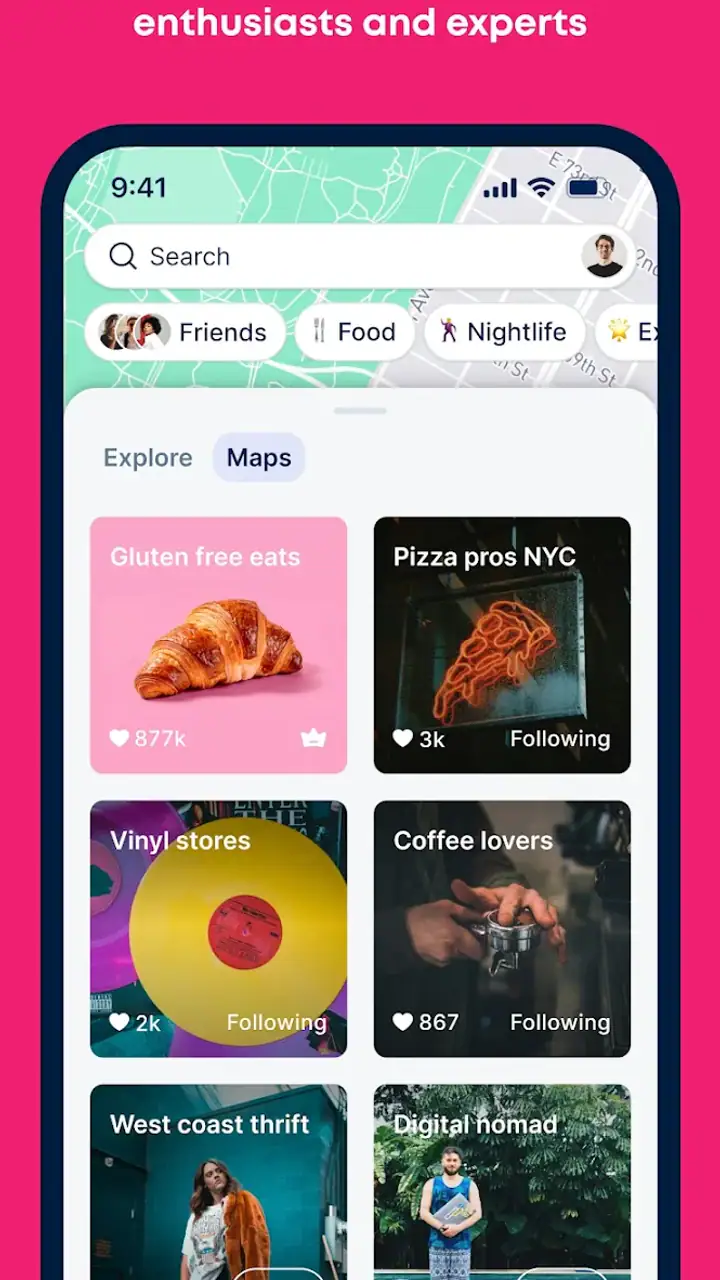
The strongest workflow is to treat the first results as a shortlist, not as a final verdict. I look for places that match the occasion, then compare them with the details I personally care about: distance, timing, atmosphere, and whether the location makes sense alongside the rest of my plans. This is an important habit because a recommendation can be appealing in isolation but awkward once transport, weather, or a tight schedule enters the picture.
I also found that the app is better for choosing between types of experiences than for answering highly precise logistical questions. If I need an exact route or a guaranteed open venue at a particular time, I would switch to a dedicated maps or booking tool. If I want inspiration and a manageable set of ideas, Atly is more comfortable.
A realistic Saturday use case
Imagine I have a free Saturday in a neighborhood I do not know well. I want to meet a friend somewhere that feels more memorable than the nearest chain, but neither of us has a specific venue in mind. With a normal map search, we might spend twenty minutes opening listings, checking photos, reading scattered comments, and still end up choosing the first acceptable option.
Atly is useful at the point where we are trying to define the outing. I can use it to explore suitable places, save a few candidates mentally or within my planning process, and then discuss the shortlist with my friend. The benefit is not that the app makes the decision for us. The benefit is that it gives the conversation a starting point better than “send me whatever you find on the map.”
There is a second advantage in this scenario: it can reduce decision fatigue. Too much choice sounds helpful but often makes planning slower. A focused discovery tool can be more valuable than a larger database if its results help me move from browsing to choosing. I still verify the practical details before leaving, but I am no longer beginning with a blank screen full of interchangeable options.
Three habits that make the recommendations more useful
First, I would search with the occasion in mind. “Somewhere for a quiet catch-up” is more useful to my decision-making than simply searching for “places nearby.” The more clearly I understand the experience I want, the easier it is to judge whether a result is genuinely relevant rather than merely close.
Second, I would avoid treating a single result as proof that it is the best choice. Discovery apps are most helpful when they expose alternatives. I compare a small group and ask which one fits my timing, company, and tolerance for travel. This prevents the app’s ranking from replacing my own judgment.
Third, I would use it before I am in a hurry. Atly is not the tool I would open while standing outside a closed venue with friends waiting. It is better during a planning pause, when I can explore, compare, and confirm details elsewhere. That small change in timing makes the experience feel much less frustrating.
Where the app saves time, and where it does not
The time saving comes from reducing the number of irrelevant places I need to inspect. It does not remove the need for checking the final details. I still want to know whether a place is convenient, whether it suits the people I am with, and whether anything has changed since the recommendation was surfaced.
That trade-off is normal for a discovery-focused travel app, but it is worth understanding before installing it. Atly can improve the first stage of research while leaving the verification stage to me. Someone expecting a complete replacement for maps, reservations, reviews, and navigation may find the experience incomplete.
For me, that separation is actually sensible. Different tools are good at different moments. I would rather use Atly to generate a thoughtful shortlist and a familiar navigation app to reach the final choice than force one application to handle every part of the journey equally.
What the rating and free model mean in daily use
The app is free to download, which makes it easy to test without committing money at the start. It is marked for Teen users, so it is positioned for a broad audience rather than being designed only for children. At the same time, in-app purchases range from $1.99 to $499.99 per item. That wide range means I would pay attention to any purchase screen and make sure I understand what is being offered before confirming anything.
I do not think the free entry point automatically makes it a perfect fit for everyone. If I already have a trusted method for finding local places and rarely explore beyond familiar searches, the app may not add enough value to become part of my routine. Its strongest case is for people who regularly need ideas, not merely directions.
The 3.7 average also encourages a realistic expectation. I would not install it assuming every suggestion will feel personally tailored. Recommendation quality can vary by destination, by the kind of place I am seeking, and by how clearly I describe the outing. The app is worth trying because the discovery concept is useful, but I would judge it by the quality of results in my own area rather than by the promise of smart recommendations alone.
When a familiar maps app is the better choice
If I know the exact venue, I would usually skip Atly and search for that venue directly. A traditional maps app is more efficient for an address, route, distance, opening information, or a quick phone call. Atly introduces a discovery step that I do not need when the decision has already been made.
I would also choose another service when reservations, tickets, or detailed travel logistics are the main priority. Atly may help me find a promising destination, but I should not confuse finding an idea with completing the whole booking process. For a tightly scheduled trip, I want tools that are built around confirmation and timing.
On the other hand, a standard map can be less satisfying when I am searching by feeling. If I want a place that suits a particular mood or a less predictable local experience, opening a huge list can create work rather than remove it. That is where Atly earns its place: it addresses uncertainty about what to choose, not just uncertainty about where something is located.
Who will get the most from this app
I think Atly is best for curious travelers, people settling into a new city, and locals who want to break repetitive routines. It is also useful for planners who enjoy building a shortlist before making a final decision. If you often say, “I want to go somewhere, but I do not know where,” this app speaks directly to that problem.
It can also help groups. Group planning often fails because everyone sends a different search result and nobody wants to compare them. A discovery-oriented starting point gives the group a shared set of possibilities. I would still confirm that the final choice works for everyone, especially when accessibility, budget, distance, or dietary needs matter.
I would be more cautious if I need highly dependable, real-time logistics or if I dislike browsing. The app asks me to explore and evaluate rather than delivering one guaranteed answer. People who prefer a direct search, a booking platform, or a navigation tool may find that extra layer unnecessary.
Another important limitation is that recommendations are not a substitute for local knowledge in every situation. A friend who knows the neighborhood may understand subtle details that an app cannot capture, such as whether a place is comfortable for a long conversation or whether the surrounding area works well late in the day. I use Atly as a way to widen my options, not as a replacement for common sense or personal recommendations.
My final take after using it as a planning companion
Atly – Know where to go is most convincing when I use it as a discovery companion. Its value comes from helping me move past generic nearby searches and consider places that fit the kind of outing I actually want. That is a narrower promise than replacing every travel tool, but it is also a more believable one.
I like the app for the early planning stage: finding ideas, reducing an overwhelming list, and giving a group something concrete to discuss. I appreciate that it can make local exploration feel more intentional instead of leaving me to sort through every possible listing. The best results come when I provide a clear purpose, compare several options, and verify practical information before setting out.
The friction is equally clear. Recommendation quality will not feel equally strong for every search or location, and the app does not remove the final responsibility of checking whether a place suits my plans. The broad in-app purchase range also means I would use a little care around paid options. People looking for exact navigation or confirmed bookings should keep their usual tools close.
My recommendation is therefore selective but positive. If you want a free Travel & Local app that helps answer the vague question “what would be a good place to try?”, it is worth exploring. If you already know exactly where you are going, a conventional map will probably be faster. For me, Atly is most useful in the gap between having no idea and having a final destination: it turns open-ended local discovery into a shortlist I can actually use.
FAQs for Atly – Know where to go
What is Atly – Know where to go?
Atly is a location-based discovery app designed to help you find interesting places recommended by people rather than relying only on traditional search rankings. You can explore restaurants, cafés, attractions, shops, nightlife spots, and local experiences through curated maps, user posts, and community suggestions. It is particularly useful when you want ideas tailored to a neighborhood, destination, or specific type of outing.
How does Atly help me discover places?
The app lets you browse maps and recommendations created by the Atly community. You can search for a city, area, or category, then view places shared in collections or posts. Recommendations may include photos, descriptions, personal comments, and location details, making it easier to judge whether a place matches your plans. Results can vary depending on your location and the amount of local content available.
Do I need an account to use Atly?
You may be able to look through some discovery content without immediately creating an account, but signing in is generally useful for getting the complete experience. An account can allow you to save places, follow creators or communities, contribute recommendations, and keep your activity synchronized. Before registering, review the permissions and privacy information so you understand how your profile and location-related data may be used.
Is Atly free to download and use?
Atly is generally available as a free download, allowing users to explore recommendations and discover places without paying an upfront purchase price. However, availability of features can change, and the places shown in the app may have their own costs, booking requirements, or paid services. Check the current listing in the Google Play Store or Apple App Store for any in-app purchases or subscription details.
Does Atly require my location, and can I use it while traveling?
Atly can be especially helpful while traveling because it allows you to explore recommendations in destinations and neighborhoods beyond your usual area. Location access may improve nearby suggestions, but you can typically search for places manually as well. If you prefer greater privacy or battery savings, review your device settings and choose whether Atly can access your location always, only while using the app, or not at all.
Pros
- Community recommendations can reveal lesser-known places beyond typical tourist spots.
- Interactive maps make it easy to browse saved locations by area.
- Users can follow creators whose tastes match their own.
- Useful for planning food
- travel
- and local activity itineraries.
- Location lists can provide inspiration when visiting unfamiliar cities.
Cons
- Recommendation quality may vary because much of the content is user-generated.
- Some cities and neighborhoods have far more coverage than others.
- Popular spots can become crowded after gaining visibility on the app.
- Finding reliable opening hours may require checking the venue separately.
- The app may use location data
- which could concern privacy-conscious users.


